All Articles

Two cheeseburger sliders, fries and two milkshakes on the counter at Motz's Burgers in Detroit

Motz’s Burgers: The Southwest Detroit Slider Counter Cooking Since 1929

Since 1929, the corner of Fort and Green in Southwest Detroit has had a burger counter on it. Today that counter is Motz’s Burgers, and it has built its reputation on something that hasn’t changed in nearly a century: small, fresh beef sliders cooked on a flat top over a pile of onions, made right in front of you.

Located at 7208 W. Fort St., the original Motz’s is a true slider counter. There’s one long stainless steel counter, a row of chrome stools and a griddle just a few feet away. You order, watch your burgers hit the flat top and eat them while they’re still hot. The family behind Motz’s has since grown the business to three locations across metro Detroit, but the Fort Street original is where it all started.

The stainless steel counter and chrome stools at Motz's Burgers on West Fort Street
Photo: RAW Detroit

At the heart of Motz’s is a simple approach: fresh ingredients from local butchers, nearby bakeries and Michigan dairy farms, cooked the old Detroit way.

A Detroit Burger Tradition Since 1929

The restaurant opened at Fort and Green in 1929 as one of the city’s original slider diners. In the early 1930s, it was sold to the Mott family, who ran it for decades as Mott’s Hamburgers.

In 1996, Bob and Mary Milosavljevski bought the restaurant, the Detroit Free Press reported. At the Mott family’s request, they changed the name slightly, and Mott’s became Motz’s. Today their sons, Mike and Tony, work alongside them, carrying the family business into its next generation.

How a Motz’s Slider Is Made

The Motz’s slider is a classic Detroit-style burger. A small ball of fresh beef is pressed onto the griddle over a bed of sliced onions, so the onions cook into the patty as it sears. From there it gets American cheese, pickles, ketchup and mustard on a soft bun.

Sliced onions and beef cooking on the flat top at Motz's Burgers
Photo: RAW Detroit

The work starts before the doors open, with beef portioned by hand, onions sliced by the tub and cheese laid out for the lunch rush.

Fresh Ingredients From Local Suppliers

Motz’s keeps its ingredient list short and local. The beef is fresh and ground by a local butcher, and the buns come from Metropolitan Baking Co. in Detroit, according to the Free Press. Milkshakes are made with farm fresh dairy and come in vanilla, chocolate and strawberry. Fries are golden shoestrings, and the onion rings are thick-cut and battered.

What to Order at Motz’s

The sliders are the reason to go, and the prices are still slider prices. A hamburger is $2.85 and a cheeseburger is $3.10. A double hamburger is $4.45, and a double cheeseburger is $4.95. Bacon adds $1 to a single or $2 to a double.

Because they’re small, sliders are easy to order by the handful. Round out the meal with fries ($3.99), onion rings ($4.99) or a shake ($5.75). If you want something other than a burger, the menu also has a chicken sandwich with pickles and spicy mayo and a fish sandwich with cheese and tartar, both $5.99.

Motz's Burgers staff working the grill on West Fort Street
Photo: RAW Detroit

Three Locations, One Family

For decades, Motz’s was a single counter on Fort Street. In September 2023, the family opened a second location on Plymouth Road in Redford Township. A third followed in March 2026 on Eureka Road in Southgate, built out in a former bakery.

The newer locations bring the same sliders closer to more of metro Detroit, while the Fort Street original remains the smallest of the three and the one with the longest history.

Detroiters have noticed. Metro Times readers voted Motz’s the best burger in Detroit in the paper’s 2026 Best of Detroit poll.

If you’re looking for a classic Detroit burger, Motz’s is worth the trip to Fort Street. Grab a stool, order a few sliders and watch them come off the griddle the same way they have since 1929.

Motz’s Burgers, 7208 W. Fort St., Detroit, 313-843-9186. Open weekdays for lunch; it often closes early once the grill sells out, and it’s closed Saturday and Sunday. Also at 27010 Plymouth Road, Redford Township (313-740-7000), and 18714 Eureka Road, Southgate (734-288-0587; Monday through Saturday, 11 a.m. to 7 p.m.). Hours vary by location, so check motzs.com before you go.

Aerial view of downtown Detroit buildings with the Detroit River behind them

Make Detroit Home: 13 Detroiters Get the First $15,000 Grants to Stay and Build in the City

Detroit has handed out its first Make Detroit Home grants. MoveDetroit announced this week that 13 Detroiters will each get $15,000 to buy or fix up a home or grow a business in the city. Mayor Mary Sheffield introduced the program as the flagship of the city’s push to grow its population. It drew more than 6,500 applications from across the country, the Detroit Free Press reported.

Aerial view of downtown Detroit buildings with the Detroit River behind them
Downtown Detroit from above. Photo: RAW Detroit

Who got the first grants

This first round, the program’s “Stay and Build” track, went to current Detroit residents who work as creatives, entrepreneurs or small business owners. According to the program listing, winners can spend the $15,000 on a business or work project, a down payment, home renovation or another housing cost.

Karissma Yve, founder of Gildform, a Detroit product and brand-creation company, plans to use her grant to invest in hiring and training from the city. Meanwhile, Imani Elie is using her funding to open her travel agency’s first storefront in East English Village, ClickOnDetroit reported.

More grants are coming

Beyond the 13 large awards, MoveDetroit plans 300 grants of $1,000 each for current and future Detroiters, the Detroit Free Press reported. Those can go toward business projects, down payments, home repairs, rent or moving costs. Together, the 13 large grants and 300 smaller ones add up to nearly $500,000 for 313 Detroiters. Applicants who missed out on the $15,000 award can still receive $1,000. In addition, recipients join a yearlong welcome program with local discounts and a free parks pass.

MoveDetroit says the effort has already helped attract or keep 158 households in the city. After the strong response, MoveDetroit President Hilary Doe said the coalition and its partners are planning a next phase.

Why the city is paying people to stay

Make Detroit Home is built around three groups: people who already live in Detroit, Detroiters who moved away and want to come back, and newcomers. Ultimately, the goal is to grow and stabilize the city’s population after decades of decline. Sheffield said Detroit offers affordability, neighborhood investment, business support and jobs, while acknowledging the city still has work to do.

The first application round is closed. For now, MoveDetroit will post next-phase updates at movedetroit.com.

The red-brick buildings and lawn of the former Siena Heights University campus in Adrian

The Former Siena Heights University Campus Is for Sale

The former Siena Heights University campus in Adrian is for sale. The 64-acre property, with more than 668,000 square feet of buildings, is listed by the Royal Oak office of Chicago-based real estate firm JLL, The Detroit News reported. No price is listed, and JLL is asking interested buyers to contact the firm directly.

The Siena Heights campus sits at 1247 E. Siena Heights Drive in Adrian, about 70 miles southwest of Detroit.

The red-brick buildings and lawn of the former Siena Heights University campus in Adrian
The former Siena Heights University campus in Adrian. Photo: Dwight Burdette / Wikimedia Commons (CC BY 3.0)

Why Siena Heights Closed

The Adrian Dominican Sisters founded Siena Heights in 1919. Then, on June 30, 2025, president Douglas Palmer announced the university would close at the end of the 2025-26 school year. The university cited its financial situation, operational challenges and long-term sustainability.

Enrollment had been sliding for years. It peaked at 2,707 students in 2015 and fell to 1,782 by fall 2021, according to reported enrollment figures. In May 2026, Siena Heights held its final commencement and graduated 441 students, Bridge Michigan reported. Ashland University in Ohio and Grand Valley State University offered transfer paths to remaining students.

What Happens to the Campus

After the closure, the campus went back to the Adrian Dominican Sisters. The Sisters have said they will not reopen the university. In addition, a 12-member committee of university, Sisters and community representatives has been studying what comes next for the site, according to the university.

Now the property is on the open market. The listing does not say what kind of buyer JLL expects, whether another school, a developer or a mix of uses.

Part of a Bigger Trend

Siena Heights is one of several small private and faith-based colleges in Michigan to close as enrollment drops and costs rise. As a result, communities like Adrian are left to decide what to do with large campuses built for thousands of students.

The CPKC Holiday Train lit up in holiday lights crossing a bridge at night, reflected in the water

CPKC Holiday Train in Detroit 2026: When, Where and How to See It

The CPKC Holiday Train will roll through Detroit on the evening of Sunday, Nov. 22, lit up on its way from Windsor to Chicago. It won’t stop for a concert anywhere in Michigan, so seeing it here takes a little planning. This guide covers when the CPKC Holiday Train should reach Detroit, the route it takes, where people have watched it in past years and how to track it live.

The CPKC Holiday Train lit up in holiday lights crossing a bridge at night, reflected in the water
The CPKC Holiday Train in Calgary in 2024. Photo: CPKC / Neil Zeller

CPKC Holiday Train in Detroit: The Short Version

  • Date: Sunday, Nov. 22
  • Last show before Detroit: Windsor, 5 to 5:30 p.m., Erie Street West and Janette Avenue
  • Detroit timing: Some time after the Windsor show ends. CPKC does not publish times for Michigan.
  • Route: Southwest Detroit, Allen Park, Taylor, Romulus, Milan and Adrian, then into Ohio
  • Cost: Free
Timeline of CPKC Holiday Train 2026 stops near Detroit: London, Chatham, Windsor, the Detroit pass-through and Franklin Park
The Holiday Train’s 2026 schedule around Detroit, from CPKC’s official U.S. schedule. Graphic: RAW Detroit

When It Should Reach Detroit

The train plays Windsor from 5 to 5:30 p.m., according to the official CPKC Holiday Train schedule. After that, it crosses under the Detroit River and comes up in Southwest Detroit. CPKC does not post times for the stretch through Michigan, so plan to be in place by about 6 p.m. and expect to wait.

Last year’s run is a useful guide. In 2025, the train paused near Michigan Central for about 40 minutes, partly for a required customs inspection, the Detroit Free Press reported. As a result, the best window to see it in the city is usually the early evening, not right at 5:30.

The Route Through Metro Detroit

The train enters Detroit in Southwest Detroit and passes behind Michigan Central, FOX 2 reported last year. From there it heads southwest, roughly following I-94. This year it will travel through Allen Park, Taylor, Romulus, Milan and Adrian before crossing into Ohio west of Morenci, WXYZ reported.

Once it leaves Detroit, it keeps moving. The next public show is Monday, Nov. 23, in Franklin Park, Illinois, outside Chicago.

Map of the CPKC Holiday Train route through metro Detroit from the Windsor stop through Michigan Central, Allen Park, Taylor and Romulus
Map: the CPKC Holiday Train route through metro Detroit on Nov. 22, with suggested viewing areas. Route approximate. Graphic: RAW Detroit

Where to Watch

Near Michigan Central in Corktown. Because the train has paused near the station during customs checks, the public streets around Michigan Central give you the best chance of a long look rather than a quick pass. Watch from the sidewalk and stay off railroad property.

Allen Park. In past years, one of the biggest viewing crowds has gathered at the lot next to Thunderbowl Lanes on Allen Road, LittleGuide Detroit reported. It is a good option if you live Downriver.

Farther out along the line. Taylor, Romulus and Milan all sit on the route, and crowds there tend to be smaller. However, the train will likely be moving at speed there, so you will see it for seconds, not minutes.

Close-up of a CPKC Holiday Train boxcar lit with red CPKC lettering and holiday lights at night
A lit CPKC Holiday Train boxcar. Photo: CPKC

Track It Live

CPKC runs a live map of the train’s location on its Holiday Train page once the train is moving. Pull it up on your phone after 5:30 p.m. and head out when it leaves Windsor. That way, you avoid standing in the cold for an hour.

Safety First

CPKC asks viewers to stay at least 50 feet back from the tracks and never to stand on the tracks or the rock bed for photos. Other freight trains also run that night and can come from either direction. Never cross the tracks to get a better angle.

Prefer a Full Show? Go to Windsor

A crowd in winter coats watching the lit CPKC Holiday Train at night
A crowd at a CPKC Holiday Train stop. Photo: CPKC

If you want the concert, cross the border. The Windsor stop runs 5 to 5:30 p.m. at Erie Street West and Janette Avenue, with Magic! and MARIS performing. Bring a passport, passport card or enhanced driver’s license to get back into the U.S. Earlier that day, the train also stops in Chatham, Ontario, from 1:45 to 2:15 p.m. at 565 Richmond St.

Every Holiday Train stop collects food and money for local food banks, and every donation stays in the community where it was given, CPKC says. Now in its 28th year, the show is always free, and CPKC warns that anyone selling tickets is running a scam.

CPKC Holiday Train Detroit FAQ

Does the CPKC Holiday Train stop in Detroit?

No. The 2026 train has no concert stops in Michigan. It passes through Detroit and Downriver on the evening of Sunday, Nov. 22, after its 5 p.m. show in Windsor.

What time will the Holiday Train be in Detroit?

CPKC does not publish a time for Michigan. The Windsor show ends at 5:30 p.m., so the train should come through Detroit some time after that. Last year it paused near Michigan Central for about 40 minutes.

Where is the best place to see the Holiday Train in Detroit?

The public streets around Michigan Central in Corktown give the best chance at a long look. Downriver, crowds have gathered at the lot near Thunderbowl Lanes in Allen Park in past years.

Is the CPKC Holiday Train free?

Yes. Every show is free. CPKC asks visitors to bring food or money for the local food bank and warns that anyone selling tickets is running a scam.

Do I need a passport to see the Windsor show?

Yes. To get back into the U.S., you need a passport, passport card, enhanced driver’s license or another approved travel document.

For more on the season, see RAW Detroit’s guides to the Detroit Thanksgiving Parade and holiday things to do in Detroit.

A blue Scarborough RT train at Kennedy Station in Toronto

The People Mover Is Getting Toronto’s Old Scarborough RT Trains

The Detroit People Mover is getting a new fleet, and Toronto riders will recognize it. A $10 million state grant will pay to replace the People Mover’s nine aging rail cars with 12 refurbished cars that used to run on Toronto’s Scarborough RT, WXYZ reported.

Gov. Gretchen Whitmer announced the money Tuesday, Oct. 13, as part of $65 million in grants through the state’s Infrastructure Projects Authority Fund. The Detroit Transportation Corporation, which runs the People Mover, applied for it as the “People Mover 1.5: Rail Car Project.”

A blue Scarborough RT train at Kennedy Station in Toronto
A Scarborough RT train at Toronto’s Kennedy Station in 2022, before Line 3 closed. Photo: Geo Swan / Wikimedia Commons (CC0)

Why Toronto’s trains fit

The Toronto Transit Commission ended Line 3 Scarborough service in July 2023. It is one of the few rail lines built on the same linear induction motor technology as the People Mover, which makes the cars close to a match for Detroit’s elevated loop. Outlier Media reported in 2023 that the Scarborough cars are nearly identical to the trains Detroit runs now.

The grant covers the work still needed before the cars can carry riders: evaluating them, reconditioning them, connecting them to the People Mover’s systems and getting them certified, according to WXYZ. The People Mover’s project plan says the swap extends the life of the system “at a fraction of the cost of purchasing a new fleet.”

A Detroit People Mover train with advertising wraps on the elevated track near the Millender Center
A People Mover train approaching the Millender Center. Photo: 42-BRT / Wikimedia Commons (CC BY-SA 4.0)

12 cars, or 18?

Reports have used both numbers. When the Detroit Transportation Corporation’s board first approved the deal with Toronto, it covered at least 12 cars and possibly up to 18, along with spare parts, Trains magazine and Global News reported at the time. The state grant is for 12 cars entering service, according to WXYZ.

How the cost compares

The refurbished cars are expected to last at least 10 years and save millions compared with buying a new fleet, according to Crain’s and WXYZ. Detroit City Council set aside about $6 million in 2024 to buy and commission the trainsets, Railway Gazette reported.

No date has been announced for the first refurbished car to carry riders.

What else Detroit got

The same round of grants gives $2 million to the Regional Transit Authority of Southeast Michigan for a planning and engineering study of downtown transit, including dedicated transit lanes, wayfinding and stop consolidation, WXYZ reported.

The car swap is the first step in a longer plan. RAW Detroit reported in September on the three routes that could take the People Mover beyond its downtown loop. The People Mover is free to ride and runs a 2.9-mile loop with 13 stations.

The red stone David Whitney House, with turrets and gables, on Woodward Avenue in Detroit

Haunted Places in Detroit: The Ghost Stories Behind 8 Real Locations

Detroit is 325 years old, and some of its best ghost stories are attached to buildings you can still walk into: a lumber baron’s mansion on Woodward, the oldest bar in the city, a 1,000-room temple in Midtown. Some of the legends hold up better than others. One of the most repeated, about the architect of the Masonic Temple, is flatly false, according to the Detroit Historical Society.

Here are seven haunted places in Detroit and one just outside it, what the stories say, who reported them, and how to visit this October.

1. The Whitney

Where: 4421 Woodward Ave., Midtown

The red stone David Whitney House, with turrets and gables, on Woodward Avenue in Detroit
The Whitney, 4421 Woodward Ave. Photo: Michael Barera / Wikimedia Commons (CC BY-SA 4.0)

Lumber baron David Whitney Jr. built the mansion in 1894 and died there in 1900. The house later served the Wayne County Medical Society and, for a time, as a tuberculosis ward before it became a restaurant.

WWJ reported that staff tie much of the activity to Flora Whitney, his first wife, who died in 1882 before the house was finished. She is said to cry in the third-floor women’s restroom, and moving a tea set in the carriage house reportedly sends china crashing to the floor. Some guests also report hearing coughing, which staff link to the TB-ward years. The Free Press reported the house is said to be haunted by both Whitneys.

How to visit: The Whitney’s Late-Night Paranormal Tour runs twice a week at 9:30 p.m. through Oct. 24. Tickets are $39 and prepaid through the restaurant’s Tock page.

2. Detroit Masonic Temple

Where: 500 Temple St., Midtown

The limestone towers of the Detroit Masonic Temple behind bare winter trees
Detroit Masonic Temple, 500 Temple St. Photo: Michael Barera / Wikimedia Commons (CC BY-SA 4.0)

Ground was broken on Thanksgiving Day 1920 and the temple was dedicated in 1926, according to the Detroit Historical Society. It has roughly 1,037 rooms and a 4,000-seat theater.

The legend goes that architect George D. Mason went broke on the project, his wife left him, and he jumped from the roof. Guards and docents have reported seeing him on the stairs, closing windows and moving things around. The Detroit Historical Society says the story is not true. Mason died in 1948 at 91, at home in the Wilshire Apartments on Grand Boulevard. The temple’s general manager told WDET it is “kind of an urban legend.”

How to visit: The temple hosts concerts and events year-round. Check themasonic.com for the calendar and any building tours.

3. Two Way Inn

Where: 17897 Mt. Elliott St., Detroit

The white two-story clapboard Two Way Inn on Mt. Elliott Street in Detroit
Two Way Inn, 17897 Mt. Elliott St. Photo: Andrew Jameson / Wikimedia Commons (CC BY-SA 3.0)

Detroit’s oldest bar was built in 1876 by Philetus Norris, according to Metro Times. Norris was a Civil War spy and the second superintendent of Yellowstone National Park, and he died in 1885. The building is in Detroit, not Hamtramck, despite what some listings say.

Metro Times reported that former owner Henrietta Malak saw a figure with a white beard, a cowboy hat and buckskins, and later matched him to photos of Norris. ClickOnDetroit reported in 2022 that the “cowboy” is still the bar’s best-known regular.

How to visit: It is a working bar. Check its social pages for current hours before you go.

4. Elmwood Cemetery and Bloody Run

Where: 1200 Elmwood St., near Lafayette Park

A bronze mourning statue at Elmwood Cemetery in Detroit against a pale blue sky
Elmwood Cemetery, 1200 Elmwood St. Photo: Sarahfraser3585 / Wikimedia Commons (CC BY-SA 4.0)

On July 31, 1763, during Pontiac’s siege of Detroit, Pontiac’s warriors ambushed British troops at Parent’s Creek, and the creek became known as Bloody Run. Elmwood holds the only stretch still above ground, according to the Detroit Historical Society.

Elmwood’s haunting is mostly history. A Preservation Detroit guide told Outlier Media they put “no haunted spin” on cemetery tours. It is still worth a walk on an October afternoon.

How to visit: The grounds are open to the public. RAW Detroit’s guide to Elmwood Alight covers the cemetery’s fall lantern event.

5. Historic Fort Wayne

Where: 6325 W. Jefferson Ave., southwest Detroit

The stone barracks at Historic Fort Wayne in Detroit beyond a snow-covered rampart
Historic Fort Wayne, 6325 W. Jefferson Ave. Photo: MJCdetroit / Wikimedia Commons (CC BY-SA 3.0)

The star-shaped fort on the Detroit River was an active military post for 128 years, according to the Historic Fort Wayne Coalition, and it mustered troops for the Civil War. Stories of phantom soldiers, footsteps and voices in the barracks circulate widely, and WDET reported in 2017 that the fort ran summer ghost tours in search of proof.

How to visit: The grounds are open daily from 6 a.m. to 8 p.m. through October. Guided tours run on select Saturdays; check historicfortwaynecoalition.com for dates.

6. Belle Isle and the White Lady of Tanglewood

Where: Belle Isle Park, 99 Pleasure Dr., Detroit

The Detroit River under heavy clouds with the tree line of Belle Isle on the horizon
Belle Isle from the Detroit River. Photo: Michael Barera / Wikimedia Commons (CC BY-SA 4.0)

Metro Times reported that a woman in white once haunted Tanglewood Drive, scaring off teenagers parked along the road, and that she “has been quiet since the 1950s.” A Wayne State University Reuther Library post on Detroit folklore reported that, in the urban legend, she is the mother of a girl murdered on that road.

How to visit: The island is a state park. A Michigan Recreation Passport is required for vehicles.

7. Eloise, Westland

Where: Kay Beard Building, 30712 Michigan Ave., Westland

The red-brick Kay Beard Building of the former Eloise hospital in Westland behind a wide lawn
The Kay Beard Building at Eloise, Westland. Photo: Dwight Burdette / Wikimedia Commons (CC BY 3.0)

The Wayne County Poor House opened on the site in 1839. FOX 2 reported that it grew into a psychiatric hospital and TB sanatorium with more than 70 buildings and about 10,000 patients by the late 1920s. Psychiatric care ended in 1979 and the hospital closed in 1984. More than 7,000 people are buried in its cemetery across Michigan Avenue.

FOX 2 reported it “is said to be haunted.” Paranormal investigators have worked there for years, Metro Times reported.

How to visit: A haunted attraction and paranormal tours have run at Eloise in past falls. Check eloiseasylum.com for this year’s dates and prices.

The Nain Rouge

Detroit’s oldest legend is not tied to one building. The Nain Rouge, a red dwarf said to appear before disaster, supposedly confronted Antoine de la Mothe Cadillac after he founded Detroit in 1701, and sightings have been attached to Bloody Run in 1763, the fire of 1805 and the summer of 1967. The earliest written version comes from Marie Caroline Watson Hamlin’s 1883 book “Legends of Le Détroit,” according to Metro Times and Model D.

The city chases him out every spring with the Marche du Nain Rouge, which runs through the Cass Corridor and ends at the Masonic Temple. This year’s parade was March 22.

Want more October? See RAW Detroit’s guides to haunted houses in Metro Detroit, Halloween in Greenfield Village and things to do in Detroit this October.

Aerial view of the red barn, Super-Mega Slide and festival grounds at Kackleberry Farms in Monroe, Michigan

Kackleberry Farms: Fall Festival in Monroe With 30+ Attractions, Less Than an Hour From Detroit

Kackleberry Farms sits on Stony Creek Road in Monroe, about 40 minutes south of Detroit, and every fall it turns into one of the biggest family destinations in southeast Michigan. The Fall Festival runs through November 1 with more than 30 attractions, a pick-your-own pumpkin patch, a corn maze cut into a new design each year, and food that goes well beyond cider and donuts.

Aerial view of the red barn, Super-Mega Slide and festival grounds at Kackleberry Farms in Monroe, Michigan
The main grounds at Kackleberry Farms in Monroe, with the Super-Mega Slide at right. Photo: RAW Detroit

Last year the farm celebrated 20 seasons of fall fun. This year it is back with all-new fall displays, new treats and an America 250 corn maze.

From a Corn Maze to a Family Farm Destination

The farm opened in 2005 as Charley’s Corn Maze Adventures. Founders Charley and Margie Helwig wanted to give families a wholesome place to connect with farming at a time when fewer people had access to a family farm. The name came later. Charley grew up on a chicken farm that supplied eggs to a Detroit bakery, and “cackleberry” is an old nickname for a chicken egg.

In 2022, Keith and Laura Middleton bought the farm and renamed it Kackleberry Farms. The Middletons come from generations of farmers and had already built a pumpkin patch and corn maze at their family farm in Washington State, modeled on Kackleberry. Today they run the Monroe farm with their four children, a son-in-law and a daughter-in-law.

Fall Festival Runs Through November 1

The Fall Festival is open Saturdays and Sundays from 11 a.m. to 7 p.m. through November 1, plus select Thursday and Friday evenings in October from 3 to 7 p.m. Gate tickets stop selling 90 minutes before close.

Admission covers the attractions. General admission is $21.99 online or $25 at the gate on weekends, and $15.97 online for Thursday and Friday evenings. Kids 2 and under are free. A season pass is $60, with an online sale price of $44.99 when available. Tickets and season passes are sold at kackleberryfarms.com, and the farm is cashless, so bring a card. If you only have cash, the admission booth can convert it to a gift card.

30+ Attractions, Including an America 250 Corn Maze

Aerial view of the America 250 corn maze design at Kackleberry Farms in Monroe
The 2026 corn maze is cut in an America 250 design. Photo: RAW Detroit

This year’s corn maze is cut in an America 250 design to mark the country’s 250th birthday. From the ground it is a few acres of corn. From above, it spells it out.

The rest of the farm is built for kids who want to run. The Super-Mega Slide is the landmark you can see from the parking lot. Around it are the Apple Blasters, stationary paintball, a Trike Track, a Barrel Train, a Jumping Pillow and jump pad, a pirate ship, a Bubble Barn with giant bubble wands, a Giant Swing and the Silly Skeleton Trail. Pig races and duck races run on a schedule, and the farm animals and Birdyville are open all day. The Barrel Train, Silly Skeleton Trail, candy cannon and pig races are weekend-only.

There are also lawn games spread across the grounds: skee-ball, tug of war, corn hole, giant Connect 4, giant tic-tac-toe, ladder ball, hook and ring and the Who’s Your Scarecrow game. A candy cannon fires over the crowd on weekends.

Pick Your Own Pumpkin

The pumpkin patch is a short walk from the main grounds, and pumpkins can be picked right off the vine or from the staged rows up front. The sunflower and zinnia fields are nearby, and the farm sells a separate flower field photography pass for families and photographers who want time in the blooms.

Aerial view of pumpkin rows arranged around a river display at Kackleberry Farms pumpkin patch
Pumpkin displays near the patch at Kackleberry Farms. Photo: RAW Detroit

Photo ops are everywhere this year, from the Kackleberry Farms truck and the pumpkin wall to new fall displays set up across the farm.

Food at the Farm

Kackleberry’s food buildings sit along the main lawn: Wild West Grill for burgers, fries and chicken, Pizza & Twist for pizza and soft pretzels, and the Frosty Loft for cider slushies and fall treats.

The Outlaw Burger placed in the top three at the 2026 Burger Wars, according to the farm. The Bandit Bites chicken and fries are cooked in a dedicated gluten- and dairy-free fryer and are certified celiac safe. Gluten-free pizza crust, vegan cheese and halal pepperoni are available.

For something sweet, there are apple cider donuts, apple crisp cups, kettle corn, apple cider slushies and the Caramel Apple Freeze, plus full-service coffee drinks, lemonade and hot chocolate with oat milk available.

Plan Your Visit

Corn maze and farm trails at golden hour at Kackleberry Farms in Monroe, Michigan
The corn maze at golden hour. Photo: RAW Detroit

Kackleberry Farms also hosts birthday parties, field trips, corporate events and Dinner in the Sunflowers during the season. Check the farm’s website for the daily schedule before you go, since weekday hours and special events change through October.

Three weekends remain in the 2026 season. Grab a pumpkin, a burger and a slushie, and plan on staying until the lights come on.

Kackleberry Farms, 6421 N. Stony Creek Rd., Monroe, MI 48162. Fall Festival open Saturdays and Sundays, 11 a.m. to 7 p.m., through November 1, plus select Thursdays and Fridays in October, 3 to 7 p.m. Last admission 90 minutes before close. Cashless. Tickets at kackleberryfarms.com.

A white Waymo Jaguar I-Pace with roof-mounted sensors

Waymo Is Now Driving Detroit Streets With Nobody in the Driver’s Seat

If you see a white Waymo in downtown Detroit with nobody behind the wheel, that is not a glitch. Since Tuesday, Oct. 6, Waymo has been running fully driverless cars in Detroit, with the front seats empty, ClickOnDetroit reported. For now, only Waymo employees can ride.

The cars are driving downtown and in Corktown, Midtown, Hamtramck and Indian Village, according to the company, which says it will gradually expand across the metro area. Detroit is Waymo’s 11th city.

A white Waymo Jaguar I-Pace with roof-mounted sensors
A Waymo Jaguar I-Pace. Photo: 9yz, CC BY 4.0, via Wikimedia Commons

When can the public ride?

There is no date yet. Waymo says it will open rides to the public “in the near future,” once the technology has been “properly validated” in Detroit. Until then, the rides are internal while the company builds what it calls a safety framework for the city.

Before this step, Waymo spent months driving Detroit streets with human safety drivers on board to familiarize its system with the city, WXYZ reported. When public service does start, riders will hail a car through the Waymo app, much like Uber or Lyft, and ride alone with no driver.

What the city says

The State of Michigan, not the city, regulates Waymo’s driverless operation, Ryan Michael, Detroit’s deputy chief of business innovation and emerging industries, told WXYZ. The city’s Office of Mobility Innovation has met regularly with the company, and it has worked with Detroit police and fire to prepare for a safe launch. Michael said the city also shared what it learned from its own pilots, including a cold-weather autonomous vehicle test and a self-driving service for seniors and residents with disabilities.

Waymo says its cars are far safer than human drivers, claiming 95% fewer serious or fatal crashes where it operates. Those are the company’s own figures.

What Detroiters think

Reactions downtown were mixed. “I’m a little nervous to say the least,” Key Webb told WXYZ, though she added that as an introvert she would enjoy skipping the small talk. Alana Hardin called it “an awesome thing to have down here” and said it could cut long ride-hailing waits on weekend nights.

Waymo’s arrival comes as other companies test self-driving cars around metro Detroit, including Tesla Cybercab sightings on area roads this fall.

A young snowboarder and two coaches on the indoor slope at Shredder Ski School in Livonia

Shredder Ski School: Indoor Ski and Snowboard Lessons for Kids in Livonia

Shredder Ski School is Michigan’s first indoor ski and snowboard school, and its Livonia location is open year-round no matter what the weather is doing outside. Kids as young as 1 learn to balance, glide and turn on an engineered indoor slope, with every lesson built around movement and play.

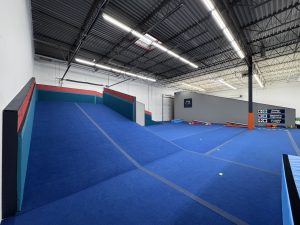
The indoor ski slope at Shredder Ski School Livonia

Located at 32543 Schoolcraft Rd. in Livonia, Shredder is part of a Colorado-born company that has been teaching kids to ski and snowboard since 2012 and now runs locations in six states. Its curriculum is built on PSIA-AASI standards, the same standards used to train instructors at ski resorts across the country.

Holiday Session Runs October 19 Through January 17

Registration is open for the 10-week Holiday Session, which runs October 19 through January 17. Students come in once a week for a 40-minute lesson, and all gear is included: skis or a snowboard, boots and a helmet, fitted each week. Kids show up in athletic clothes and socks. No snow pants or thermals needed.

Because lessons happen indoors, families can keep a consistent weekly routine through the fall and winter with no weather cancellations. Instructors track each child’s progress week to week and let parents know when they are ready to take what they have learned to a real mountain.

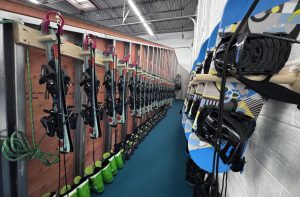
Helmets and boots on the gear wall at Shredder Ski School Livonia

How the Indoor Slope Works

The slope is an engineered surface used at training facilities across Europe, Asia, Australia and the US. Skis and snowboards glide and engage their edges on it much like they do on packed snow, so the skills kids build in Livonia carry over directly to the hill.

Shredder compares it to learning to swim. You start in the shallow end of a warm pool with a patient coach, one skill at a time, one week at a time. The mountain is the victory lap, not the classroom.

Classes for Ages 1 to 10

Group classes are organized by age and ability, with small student-to-instructor ratios.

  • Yeti School (Ages 1–3): Parent and child on the slope together for a toddler’s first steps on skis.
  • Little Shredders (Ages 3–5): A small-group ski or snowboard class focused on fundamentals that stick: balance, coordination and the basics of technique.
  • Ski & Board School (Ages 5–10): Small-group lessons built around edge control and turning technique for kids ready to carve real turns.

Group classes are $38 per week, or $380 for the full session.

A Shredder coach helps a young student strap into a snowboard

Private Lessons for Kids, Teens and Adults

One-on-one lessons with a trained coach are available for all ages and skill levels at $85 per lesson, or $225 for a three-lesson pack. Up to three more people can join a private lesson at a discounted rate, which makes it a good option for siblings or a parent who wants to learn alongside their kid.

A coach guides a young snowboarder at Shredder Ski School Livonia

Open Gym, Parents Night Out and Birthday Parties

Beyond weekly lessons, Shredder offers drop-in Open Gym time for $25 a visit so enrolled kids can get extra practice. Parents Night Out runs Friday evenings for ages 3 and up at $50 per night, with a sibling discount. Birthday parties for ages 3 to 10 start at $350. Gift certificates are available in any amount and never expire.

The lobby and Shredder logo wall at the Livonia location

Spots Are Limited

The Holiday Session fills quickly every year, and class sizes are kept small. Families who want a spot should register soon at shredderski.com/livonia-register. Shredder runs sessions year-round, so there is always a next one to join.

Shredder Ski School Livonia, 32543 Schoolcraft Rd., Livonia, MI 48150. (734) 608-2981.

Open Monday through Friday, 9 a.m. to 8 p.m., and Saturday and Sunday, 8 a.m. to 6 p.m. Free parking in the shopping center lot.

Officials cut the ribbon in front of The Hive on Russell apartment building in Detroit

The Hive on Russell Opens 78 Affordable Apartments Near Eastern Market

A long-stalled block between Eastern Market and Lafayette Park has 78 new affordable apartments. The Hive on Russell, at 2033 Russell St., opened with a ribbon-cutting on Oct. 2, nearly a decade after the nonprofit developer Develop Detroit started the project.

Every unit in the $23.9 million building is rent-restricted under the federal Low-Income Housing Tax Credit program for households earning 30% to 60% of the area median income, roughly $33,000 to $63,000 a year, MLive reported.

Officials cut the ribbon in front of The Hive on Russell apartment building in Detroit
The ribbon-cutting at The Hive on Russell, 2033 Russell St. Photo: City of Detroit

What is inside

The building has 39 studios, 33 one-bedrooms and six two-bedrooms. Residents get a fitness room, a business center, a community lounge with a terrace looking toward downtown, an automated dog wash and turf dog run, a bike repair station with secure bike storage, and podium parking, according to the city. Continental Management runs the property.

“The Hive is exactly what we want to see more of in Detroit,” Mayor Mary Sheffield said at the opening.

A site that sat for years

The 0.66-acre lot at Russell Street, Gratiot Avenue and Service Street had been vacant, and the old buildings on the block drew years of complaints. Develop Detroit started the project in 2017 with plans for a larger campus, but the pandemic and swings in financing and construction costs forced a rework, according to the city. “Instead of staring at vacant buildings and watching the property fall brick by brick,” City Council President James Tate said of the turnaround, MLive reported.

Who paid for it

The city put in about $4.5 million: $4 million in American Rescue Plan Act money and $445,000 from its Affordable Housing Development and Preservation Fund. PNC Bank provided tax credit equity, the Michigan State Housing Development Authority provided financing, and Cinnaire was the lending partner. The Kresge Foundation also supported the project.

Senior housing could come next

On the day of the ribbon-cutting, Develop Detroit submitted a tax credit application for a second phase with 70 affordable apartments for seniors, in partnership with CSI Co-op, MLive reported. Two older buildings on the property would come down to make room. If it is funded, the site would hold 148 affordable homes. Sheffield said the senior phase “warms my heart.”

Aerial view of I-696 curving through Southfield and Oakland County

Westbound I-696 Reopens Monday, Oct. 12, After Eight Months: Which Ramps Are Back

Westbound I-696 reopens between I-75 and the Lodge Freeway at 5 a.m. Monday, Oct. 12, ending a closure that began in February. The Michigan Department of Transportation shut the stretch over the weekend to move westbound traffic back to its own side of the freeway, Fox 2 reported, and most of the westbound ramps come back with it.

Eastbound I-696 stays closed between the Lodge and I-75 through the end of the year.

Aerial view of I-696 curving through Southfield and Oakland County
I-696 through Southfield, seen from the air. Photo: Ken Lund, CC BY-SA 2.0, via Wikimedia Commons

Which westbound ramps reopen Monday

These westbound ramps reopen with the freeway at 5 a.m. Monday, according to MDOT’s list as reported by Fox 2: I-75, Campbell/Hilton and Bermuda/Mohawk, the M-1/Woodward on-ramp, Coolidge, Greenfield, Southfield, Evergreen, Lahser and US-24/Telegraph.

The exception is the westbound exit to Woodward Avenue. Crews paused work there for the Woodward Dream Cruise and still have to finish resurfacing the 10 Mile service drive, MDOT spokesperson Diane Cross told WDET. “We have to come back and do some work on the service drive,” Cross said. Fox 2 reported the Woodward exit will stay closed through Saturday, Oct. 17, while WDET did not give a reopening date, so check MDOT before planning around that exit.

Why eastbound stays closed

Eastbound traffic stays on detours because crews have to repair every spot where they let drivers cross over through the work zone and clean up the median. “We have to repair all those places where we were letting traffic cross over through the work zone,” Cross told WDET. MDOT expects that work to wrap up by the end of 2026.

What comes next for the Reuther

The work is part of MDOT’s Restore the Reuther project, which began rebuilding I-696 between I-75 and the Lodge in early 2025. In 2027, crews move east to the stretch between I-75 and Dequindre Road. That project will keep two lanes open in each direction, Cross said, so drivers should not see another full closure there.

The Autocar Service Building at Piquette Avenue and Brush Street in Detroit

Detroit PBS Is Moving to Detroit: Erb Public Media Campus Rising at 234 Piquette

Detroit PBS has broadcast from Wixom for years. Now it is building a new home in Detroit. Construction has started on the Fred and Barbara Erb Public Media Campus at 234 Piquette Ave. in Milwaukee Junction, which will put Detroit PBS and 90.9 WRCJ under one roof for the first time when it opens in fall 2027.

The Autocar Service Building at Piquette Avenue and Brush Street in Detroit
The Autocar Service Building at Piquette and Brush, future home of the Erb Public Media Campus. Photo: Andrew Jameson, CC BY-SA 3.0, via Wikimedia Commons

What the new campus will hold

The roughly 50,000-square-foot campus is a renovation and expansion of the old Autocar Service Building, just east of Woodward Avenue in the Piquette Avenue Industrial Historic District. Plans include a studio theater for televised productions, an indoor-outdoor performance space, a lifelong education center, a journalism hub, and new TV, radio and digital production facilities, along with gathering spaces and outdoor areas, DBusiness reported. Sachse Construction of Detroit is handling the renovation.

Autocar, the truck maker founded in 1899, used the building for service. The station bought the property in April 2024.

A challenge grant met a year early

The Fred A. and Barbara M. Erb Family Foundation pledged $7.5 million as a challenge grant, matching every dollar donated to the project one to one. Detroit PBS and WRCJ met that challenge a full year ahead of schedule, announcing it at the Mackinac Policy Conference this spring, and the match brought in $15 million in combined support. Wayne County has since committed $2 million.

The full project costs $40 million, and the campaign is 75% funded, DBusiness reported after the groundbreaking.

“This is a defining moment for Detroit PBS, 90.9 WRCJ and the communities we serve,” said Rich Homberg, president and CEO of Detroit PBS and WRCJ. John Erb, the foundation’s chair and son of Fred and Barbara Erb, said his parents “believed deeply in the power of arts, culture, education, environmental stewardship.”

Why Milwaukee Junction

The move brings Detroit’s public broadcaster back into the city, into a neighborhood that was one of Detroit’s first auto districts. The Ford Piquette Avenue Plant, where the Model T was born, sits a few blocks away. “Wayne County has been a nationally recognized hub of the arts, culture and publicly supported journalism,” Wayne County Executive Warren C. Evans said.

Detroit Gift Store's 313 Box over the downtown Detroit skyline

Detroit Gift Store: Holiday Gift Boxes Packed With Better Made, Vernors and Sanders

Ask a Detroiter who moved away what they miss, and the answer is rarely a building. It is Vernors poured over vanilla ice cream, a bag of Better Made, Sanders hot fudge warmed in the jar, a coney with the right sauce. Detroit Gift Store is built around that list. The new shop at detroitgiftstore.com packs boxes of Detroit and Michigan-made food and keepsakes by hand and ships them across the U.S. and to Canada.

In short, the idea is simple: a gift that tastes like home to someone who grew up here, and like a good introduction to anyone who didn’t.

Detroit Gift Store's 313 Box over the downtown Detroit skyline
Image: Detroit Gift Store

Five boxes, each built for someone specific

The 313 Box ($79) is the flagship. It holds Better Made chips, Faygo Rock & Rye, Vernors for a Boston Cooler, Sanders hot fudge, Germack’s cherry and praline nuts from Eastern Market and a skyline magnet for the fridge.

Next, the Care Package ($59) collects what Detroiters who left say they miss most. Alongside the Vernors, hot fudge, Rock & Rye and chips, it adds coney sauce and a box of Jiffy corn muffin mix for a Sunday dinner. However, because of the coney sauce, it ships within the U.S. only.

Meanwhile, the Michigan Box ($79) leans up north, with Germack dried Michigan cherries, Mackinac Island fudge, Koeze Cream-Nut peanut butter from Grand Rapids, Kar’s Sweet ‘N Salty and Pop Daddy dill pickle pretzels. The Game Day Box ($75) pairs a Honolulu blue mug, a deck of Detroit football playing cards and a glitter ornament with the snack spread. Finally, the Woodward ($189) is the executive box, with a handmade leather journal, Detroit-roasted coffee, Hell Fire Detroit hot sauce, Germack pistachios and the best of the pantry.

Or build your own

Buyers can also build their own box from five shelves: pop, salty, sweet, nuts and pantry, and keepsakes. A half box is $49 for four picks, and a full box is $89 for eight. The pop shelf alone covers six Faygo and Vernors flavors, including Redpop, Moon Mist and Cotton Candy. In addition, every box comes with a handwritten card, and a custom photo card costs $10 more. The shop also never puts prices inside the box.

Corporate gifts and holiday deadlines

The shop also takes corporate orders, from a handful of client gifts to hundreds of boxes, with a company logo on the card. Orders over $75 ship free in the U.S.; under that, ground shipping is $9.95. For Canada, shipping is a flat $39.95.

For delivery by Christmas, the store’s cutoffs are Dec. 11 for ground shipping, Dec. 15 for priority, Dec. 17 for express and Dec. 9 for Canada. Shoppers who order early can also hold their box so it ships the week of Dec. 8. Local pickup in Detroit is available by appointment.

Detroit Gift Store, detroitgiftstore.com. Boxes from $49. Local pickup at 2200 Hunt St., Detroit, by appointment through hello@detroitgiftstore.com.

The Detroit River seen from Belle Isle, with downtown Detroit and the Ambassador Bridge in the distance

Detroit River Cleanup: Michigan Puts Nearly $50 Million Toward Clearing PCBs

Michigan is putting nearly $50 million toward cleaning toxic PCBs out of the bottom of the Detroit River. Gov. Gretchen Whitmer announced the money on Oct. 1 as part of Reclaim the Rivers, a statewide river cleanup plan with a goal of “lasting, transformational change” on the Detroit and Kalamazoo rivers by 2040.

The state’s dollars can also go further than their face value. Under the federal Great Lakes Legacy Act, Michigan can draw close to $2 in federal money for every $1 it spends on cleaning contaminated sediment, according to the governor’s office.

The Detroit River seen from Belle Isle, with downtown Detroit and the Ambassador Bridge in the distance
The Detroit River with the Windsor and Detroit skylines, seen from Belle Isle. Photo: TheWxResearcher, CC0, via Wikimedia Commons

What the money is for

PCBs, or polychlorinated biphenyls, are industrial chemicals that settle into river sediment and build up in fish. Along with PAHs, mercury and other pollutants, they are a legacy of the factories that lined the river for more than a century, and they are a big reason anglers are told to limit how much Detroit River fish they eat.

Beyond the sediment work, the state says the investment will restore fish and wildlife habitat, expand boating access, improve Belle Isle and other public land, and close gaps in the Iron Belle Trail. It will also support the river’s walleye fishery, which draws anglers from across the region every spring.

“Over the past 25 years, Detroit has reclaimed its riverfront from centuries of industrial use to give it back to the people,” Detroit Mayor Mary Sheffield said in the announcement.

The rest of the $89 million

The state is calling Reclaim the Rivers an $89 million commitment. Besides the Detroit River money, it includes $25 million for the Kalamazoo River watershed, paid for by the Morrow Dam settlement, and a fund of more than $14 million for river restoration elsewhere in Michigan, including dam removals and wetland work.

The Michigan Department of Environment, Great Lakes and Energy and the Department of Natural Resources are leading the work together. Joint teams for each river will work with local governments, tribes and groups like Friends of the Detroit River to decide which projects come first, and the state says community input will help guide how the money is spent.

A riverfront that already draws millions

The Detroit riverfront already draws an estimated 3 million visitors a year, according to the state. Cleaner water and sediment would add to two decades of riverfront work on land, from the RiverWalk to the parks along the east and west riverfronts, by finally addressing what sits at the bottom of the river itself.

Detroit Thanksgiving Parade floats and costumed marchers on Woodward Avenue at America’s Thanksgiving Parade

Detroit Thanksgiving Parade 2026: Route, Start Time, Tickets and Parking for the 100th Parade

The parade your grandparents watched from a Woodward curb is about to run for the 100th time. Detroit’s Thanksgiving parade, officially America’s Thanksgiving Parade, steps off Thursday, Nov. 26 at 8:45 a.m. at Woodward and Kirby in Midtown and marches south to Congress Street downtown, past Campus Martius. The Turkey Trot runs the same streets before it. The Lions host the Chicago Bears at Ford Field at 1 p.m. after it. Grandstand seats start at $65, and the curb is still free. Here is how to plan the whole morning, from the route and start time to tickets and where to park.

Detroit Thanksgiving Parade floats and costumed marchers on Woodward Avenue at America’s Thanksgiving Parade

America’s Thanksgiving Parade on Woodward. Photo: City of Detroit, public domain

Detroit Thanksgiving Parade 2026 at a Glance

When Thursday, Nov. 26, 2026, stepping off at 8:45 a.m.
Route Woodward Ave. from Kirby in Midtown to Congress downtown, past Campus Martius
Grandstand seats $65 or $75 per person, plus a fee online; on sale through Nov. 23 or until they sell out
Free viewing Most of the route, with no ticket needed
On TV WDIV Local 4, 10 a.m. to noon, also streamed on ClickOnDetroit
Turkey Trot 10K and 1-mile at 7:30 a.m., 5K at 8:30 a.m.
Lions game Lions vs. Chicago Bears, 1 p.m., Ford Field, on CBS
Hob Nobble Gobble Friday, Nov. 20, Ford Field; tickets from $450
Typical weather Normal high 44, normal low 31 for Nov. 26

Grandstand Tickets and Prices

The Parade Company sells reserved bleacher seats through its grandstand ticket page until Monday, Nov. 23, or until inventory runs out. Seats cost $65 in four zones and $75 in the two zones at the southern end of the route, according to the company’s 2026 order form. Buying online adds a service fee, so the $65 seats come to $67.60 at checkout and the $75 seats come to $77.89.

Zone Where on Woodward Sections Price
Parade Step-Off Kirby to Farnsworth, in front of the Detroit Institute of Arts 102, 104, 106 $65
Detroit Blue Zone Montcalm to Adams, near Comerica Park 202, 204, 206 $65
Detroit People Mover Park Ave. to Clifford 301, 302, 304 $65
The Shopping District John R to Grand River, across from the Shinola Hotel 401 through 409 $65
Celebration Zone State Street to Campus Martius 601 through 610 $75
Campus Martius Michigan and Woodward 701, 703 $75

The Step-Off stands sit closest to the start, so the floats reach them first. For the TV Zone and Celebration Zone blocks, the order form lists a live pre-show from 9 to 10 a.m. ahead of the 10 a.m. broadcast.

A few details from the order form. Every grandstand ticket includes a 2026 commemorative parade pin. Tickets are non-refundable. Mail and email orders are due Friday, Nov. 13, carry a 3.75 percent credit card fee and cost $9 to ship unless you schedule a pickup at The Parade Company. One child under 2 gets in free per paid ticket but must stay on the ticket holder’s lap.

Know the rules before you pack the wagon, because the wagon stays out. The grandstands allow small bags only, and security may check them. Strollers, wagons, bikes, scooters and hoverboards are not allowed. Neither are umbrellas, signs, smoking or vaping, or pets other than service animals. Standing against the barricade in front of a grandstand is prohibited.

ADA seating in Section 101

Section 101 is a street-level viewing area in front of the Detroit Public Library, across Woodward from the DIA. It opens at 8 a.m. on parade morning on a first-come, first-served basis, and an usher hands out ticketed lanyards. There are no seats, so bring a chair or wheelchair. Each guest with a disability may claim two tickets, one for a caregiver. Accessible parking is not included. The Parade Company points to limited spaces at Wayne State University and to the ParkDetroit app.

Where to Watch for Free

Detroit Thanksgiving Parade 2024: mounted police lead a balloon down Woodward Avenue past crowds watching free from the curb

Mounted police on Woodward at the 2024 parade. Photo: City of Detroit, public domain

You do not need a ticket. The parade is free and most of the route is open to the public, The Parade Company says. The grandstands cover only the blocks in the table above, and the curb everywhere else belongs to whoever gets there first.

The Parade Company has pointed viewers to a few stretches. In a past WXYZ segment, it named Midtown, where coffee shops and restaurants open for the crowd, and Grand Circus Park, which puts park space on both sides of Woodward. It also singled out the blocks between Grand Circus Park and Grand River, where the floats stand against tall buildings on both sides.

Neither the organizer nor the city publishes a recommended arrival time for curb viewers. Two posted details are worth planning around. Drivers could cross Woodward at only eight intersections, and only until 5 a.m., on Thanksgiving last year, so park on the side of Woodward you plan to watch from. The Turkey Trot also tells its runners to be parked by 6:15 a.m. because the race, the parade and the Lions game all bring heavy traffic downtown.

The Detroit Historical Museum, which sits at Woodward and Kirby where the parade steps off, sold tickets to an indoor viewing morning last year with parking at the College for Creative Studies included. A 2026 date had not been posted as of Oct. 2.

Dress for a long morning outside. The normal high for Nov. 26 at Detroit Metro Airport is 44 degrees and the normal low is 31, based on National Weather Service 1991 to 2020 climate normals. The Parade Company posts a map of portable restrooms along the route. Its visitor page directs parents of lost children to Detroit Police Department Downtown Services at 20 Atwater, (313) 237-2850.

Getting There and Parking

A People Mover train at Cadillac Center station downtown

A People Mover train at Cadillac Center station, the stop closest to the Campus Martius grandstands. Photo: 42-BRT, CC BY-SA 4.0, via Wikimedia Commons

As of Oct. 2, the City of Detroit had not released its 2026 street closure and parking plan, and The Parade Company’s visitor page still carries 2025 information. Last year’s plan is below, labeled as such. Check the city’s announcement in the week before Thanksgiving.

Road closures (2025). Woodward closed to traffic from West Grand Boulevard to Larned starting at 5 a.m. Thanksgiving Day, with sections closing the day before for setup. Until 5 a.m., drivers could cross Woodward at Warren, Alexandrine, Mack/MLK, the Fisher Service Drive, Adams, Park/Witherell, John R/Clifford and Grand River. Downtown streets on the Turkey Trot course, including West Jefferson, Fort, Congress, Michigan and Monroe, closed at 5 a.m. and reopened around 10 a.m.

City garages (2025). The Municipal Parking Department recommended the Ford Underground Garage at 30 E. Jefferson Ave. and the Eastern Market Garage at 2727 Riopelle St. Both charged $10 on Thanksgiving, open 5 a.m. to 7 p.m., ClickOnDetroit reported. Metered street parking was free on Thanksgiving and the day after.

Turkey Trot garages (2026). Race organizers list the Huntington Place roof deck and the Huntington Place Washington Boulevard garage at $25 each, credit card only, both closing at 1 p.m. on Thanksgiving. The Millennium Garage at 432 W. Congress is listed at $12, also card only.

People Mover. The People Mover is free to ride. Last Thanksgiving it ran from 6 a.m. to 7 p.m. and gave out free hot cocoa and hand warmers at Grand Circus Park Station from 7 to 10 a.m. Broadway and Grand Circus Park stations sit closest to the Woodward route, and Cadillac Center is closest to the Campus Martius grandstands, CBS Detroit reported from the city’s 2025 plan. Thanksgiving 2026 hours have not been announced.

QLine. The QLine runs on Woodward, so it stops for the parade. Last year it ran no service on the Wednesday before Thanksgiving or on Thanksgiving Day, WWJ reported. The 2026 schedule has not been posted.

DDOT buses. DDOT ran a Sunday schedule last Thanksgiving, with delays starting at 6 a.m. and affected routes running to the Rosa Parks Transit Center.

Parade Day Timeline

Detroit Thanksgiving Parade 2025: the Rochester High School Falcon Marching Band on Woodward Avenue

Rochester High School’s marching band at the 2025 parade. Photo: City of Detroit, public domain

6 a.m. Turkey Trot Race Central opens in Hall E at Huntington Place
7:30 a.m. Turkey Trot 10K and Mashed Potato Mile start
8 a.m. ADA Section 101 opens in front of the Detroit Public Library
8:30 a.m. Stuffing Strut 5K starts
8:45 a.m. Parade steps off at Woodward and Kirby
9:10 a.m. All Turkey Trot runners must be off Woodward
10 a.m. WDIV Local 4 broadcast begins; Turkey Trot finish line closes
Just after noon Parade wraps up past Campus Martius
1 p.m. Lions vs. Chicago Bears kick off at Ford Field

The Turkey Trot

The 44th Strategic Staffing Solutions Turkey Trot runs Thanksgiving morning ahead of the parade, on the same downtown streets. The 10K and the Blue Cross Blue Shield of Michigan Mashed Potato Mile start at 7:30 a.m., and the Stuffing Strut 5K starts at 8:30 a.m., according to The Parade Company.

As of Oct. 4, registration on the race’s RunSignup page costs $55 for the 10K or the 5K and $35 for the mile, with the listed full prices at $60 and $40. Each entry includes a long-sleeve tech shirt, a finisher medal and a bib.

Advance packet pickup runs Nov. 14 through Nov. 21, and Race Central at Huntington Place hands out packets Thanksgiving morning starting at 6 a.m. Jogging strollers are allowed on the course. Pets and bikes are not, The Parade Company says.

The Lions game

The Lions host the Chicago Bears at 1 p.m. at Ford Field, on CBS and Paramount+, under the NFL’s 2026 schedule. It will be Detroit’s 87th Thanksgiving game. The Lions went 38-46-2 on the holiday from 1934 through 2025, CBS Sports reported.

The tradition started as a sales pitch. Owner George A. Richards had just moved the Portsmouth Spartans to Detroit in 1934 and booked the unbeaten Bears for Thanksgiving to win over a baseball town, ClickOnDetroit reported. The Bears won 19-16 in front of 26,000 people at University of Detroit Stadium on Nov. 29, 1934, and Richards put the game on national radio. The Lions have played at home on the holiday every year since, except from 1939 through 1944.

Hob Nobble Gobble, Nov. 20 at Ford Field

The Parade Company’s Hob Nobble Gobble, presented by Ford, kicks off parade week on Friday, Nov. 20. Ford Field becomes an indoor carnival with a midway, a carousel, a Ferris wheel, a buffet and a visit from Santa Claus. Grammy-nominated rapper Soulja Boy headlines this year, the organizer announced.

It is the parade’s fundraiser, and the 2026 order form prices it that way. Benefit tickets cost $450 per person with general seating and 6:30 p.m. admission. Patron tickets cost $650 with 6 p.m. early admission, and SuperStar tickets cost $1,000 with 5 p.m. admission and a cocktail hour. Children 6 and under are $250 each. Tables of 10 or 12 are also available. Orders go through the form on the Hob Nobble Gobble page by email or fax, and part of each ticket is tax-deductible as a gift to the Michigan Thanksgiving Parade Foundation. For more of the season, see our guide to holiday things to do in Detroit.

The 100th Parade: From 1924 to Now

Detroit Thanksgiving Parade 2022: the Big Head Corps lined up on Woodward Avenue

The Big Head Corps at the 2022 parade. Photo: City of Detroit, public domain

The J.L. Hudson Co. department store launched the parade in 1924, the same year Macy’s started its parade in New York, according to the Detroit Historical Society. That first Detroit parade had horse-drawn floats, papier-mâché heads and seven marching bands, ClickOnDetroit reported. The parade was on radio by 1931 and on local television by 1948. Wartime material shortages suspended it in 1943 and 1944, and Hudson’s brought it back in 1945, the historical society says.

The Parade Company counts this year’s march as the 100th, and its theme is “This is 100.” The parade now runs more than 75 units of floats, balloons and marching bands, according to the company.

Two parade fixtures go back decades. The Big Heads, oversized papier-mâché characters modeled on a European carnival tradition, still march every year. So does the Distinguished Clown Corps, presented by Emagine Entertainment, made up of business and community leaders who donate for the chance to march in clown makeup. More than 2,000 people have joined it over more than 40 years.

What’s new this year

Detroit Thanksgiving Parade 2025: floats rolling down Woodward Avenue

Floats on Woodward at the 2025 parade. Photo: City of Detroit, public domain

Parade Company artists built eight new floats, which will be unveiled in the weeks before the parade and stay in the lineup for three years, DBusiness reported. Gardner White, Corewell Health, University of Michigan Health C.S. Mott Children’s Hospital and The Skillman Foundation return with new floats. The Detroit Zoo, Motor City Electric, the Detroit Institute of Arts and Meijer join as new float sponsors. The Strategic Staffing Solutions float is getting a new section, and Hudson’s Detroit will be draped in a massive American flag, according to DBusiness.

Dan Gilbert, founder and chairman of Rocket Cos., is this year’s grand marshal. “The 100th America’s Thanksgiving Parade presented by Gardner White will be one of the biggest moments in our city and state’s history,” Tony Michaels, president and CEO of The Parade Company, told DBusiness.

How to Watch on TV and Live Stream

If you would rather watch from home, WDIV Local 4 airs the parade from 10 a.m. to noon, and ClickOnDetroit streams it. WOMC 104.3 carries it on the radio. The broadcast is also syndicated to 185 markets nationwide, and The Parade Company says it will post the 2026 station list the week of Nov. 23.

Detroit Thanksgiving Parade FAQ

When is the 100th America’s Thanksgiving Parade?
Thursday, Nov. 26, 2026. It steps off at 8:45 a.m. at Woodward and Kirby and ends at Woodward and Congress just after noon.

How much are grandstand tickets?
$65 per person in four zones and $75 in the Celebration Zone and Campus Martius, plus a service fee online. Sales run through Nov. 23 at theparade.org or until seats sell out.

Can I watch the parade for free?
Yes. Most of the route along Woodward is free and open to the public.

Where is ADA seating?
Section 101, in front of the Detroit Public Library, first come, first served from 8 a.m. Bring your own chair.

What time is the Lions Thanksgiving game?
The Lions host the Chicago Bears at 1 p.m. at Ford Field, about an hour after the parade ends.

Does the QLine run on Thanksgiving?
It did not last year, when it shut down Wednesday and Thanksgiving Day for the parade. The 2026 schedule has not been posted. The People Mover, which is free, ran from 6 a.m. to 7 p.m. last Thanksgiving.


Aerial view of Zug Island in River Rouge, Michigan, in July 2026, with the idled blast furnaces and the canal that separates it from the mainland

Zug Island: How a Furniture Maker’s Swamp Became Detroit’s Most Off-Limits Island

Zug Island sits at the mouth of the Rouge River, where River Rouge meets southwest Detroit. Most people only see it from the Gordie Howe Bridge approach, the Windsor riverfront or a Delray side street. The island is private industrial property. It has been closed to the public for as long as anyone alive can remember. The story of how a swamp became one of the most fenced-off pieces of land in metro Detroit starts with a furniture maker.

Aerial view of Zug Island in River Rouge, Michigan, in July 2026, with the idled blast furnaces and the canal that separates it from the mainland
Photo: WMrapids / Wikimedia Commons (CC0)

Zug Island started as a furniture maker’s bad land deal

Samuel Zug came to Detroit from Pennsylvania in 1836 and built a furniture business with partner Marcus Stevenson. According to the Elmwood Historic Cemetery biography, Zug was also an early abolitionist who sheltered freedom seekers on the Underground Railroad. He served on the executive committee of the Refugee Home Society, which bought land in Canada for people escaping slavery.

In 1859, the same year the furniture partnership dissolved, Zug bought 334 acres of marsh at the river mouth. The Detroit Historical Society says the land was too swampy for the home he planned. So the property sat. Then, in 1888, Zug let the River Rouge Improvement Company dig a canal through it. The cut gave ships a shortcut between the Rouge and the Detroit River. It also turned the parcel into an island. Zug died in 1889. His heirs sold the island to George Brady and Charles Noble in 1891.

Steel ran on the island for 118 years

Industry moved in fast. The Solvay Process Company used part of the island for soda ash in the 1890s. Detroit Iron and Steel began building a blast furnace in 1902, according to a Planet Detroit history published by BridgeDetroit. The M.A. Hanna Company bought the works in 1904 and added a second furnace in 1909. The plant folded into Great Lakes Steel in 1931, which later became part of National Steel. In 1922 the island was incorporated into the city of River Rouge, not Detroit. U.S. Steel picked up the plant after National Steel’s bankruptcy in 2003 and ran it as Great Lakes Works.

Aerial view of Zug Island from the east in October 2011, with the Great Lakes Works blast furnaces still running
Photo: Eric Vance / U.S. EPA via Wikimedia Commons (public domain)

That era ended in 2020. In December 2019, U.S. Steel said it would indefinitely idle iron and steelmaking at Great Lakes Works. The move, as Crain’s Detroit Business reported affected up to 1,545 workers. The blast furnaces went cold in April 2020 and have not restarted. U.S. Steel itself became part of Japan’s Nippon Steel in June 2025, so the furnaces now belong to a Tokyo-based parent.

The island is not empty, however. DTE Energy’s EES Coke Battery still bakes coal into metallurgical coke in 85 ovens on the island. In February 2026, a federal judge ordered DTE and three subsidiaries to pay a $100 million Clean Air Act penalty. The case centered on sulfur dioxide emissions from the battery, according to the U.S. Department of Justice. Planet Detroit reported that DTE appealed in March 2026 and warned that required pollution controls could make the plant economically unviable.

The Windsor Hum and the Zug Island furnaces

Across the river, Zug Island has a second reputation. Starting in 2011, Windsor residents complained of a low rumble that rattled windows and kept people awake. Canada’s federal government funded a study, and in 2014 Global Affairs Canada published the results. The University of Windsor team, led by engineering professor Colin Novak, concluded the likely source was the blast furnace operations on Zug Island. A second team from Western University could not confirm that. Neither team was allowed onto the island to test.

Then the furnaces shut down. Novak told WCMU and NPR in August 2020 that complaints stopped after U.S. Steel idled the plant that April. He considered the mystery solved at “ninety-nine percent.” Nobody on the American side ever formally confirmed the link.

There is no public access to Zug Island. The best legal views are from the Gordie Howe Bridge path, the Windsor riverfront trail near Brighton Beach, and the foot of West Jefferson Avenue in River Rouge.

The Detroit Zoo water tower and grounds from above

Zoo Boo 2026: Dates, Tickets, and the New Trails at the Detroit Zoo

Zoo Boo returns to the Detroit Zoo for four October weekends, and this year it starts an hour earlier and includes something that was not there last fall: the $49 million Fred and Barbara Erb Discovery Trails. Here are the dates, the prices, and what admission covers.

The Detroit Zoo water tower and grounds from above
Photo: WMrapids / Wikimedia Commons (CC0)

Zoo Boo 2026 at a Glance

Dates Oct. 3 and 4, Oct. 9 to 11, Oct. 16 to 18, Oct. 23 to 25
Hours 3 to 8:30 p.m., an hour earlier than last year
Tickets $21 to $25 in advance, $27 at the gate
Members $18.90 to $22.50 in advance, $24 at the gate
Who needs a ticket Everyone 2 and older
Parking $8 per vehicle, free for members

What the Ticket Covers

A Zoo Boo ticket is not only the trick-or-treat trail. It includes full zoo access until 6 p.m., so the animals are part of the evening if you arrive early. After that, the event takes over the front of the zoo.

Trick-or-treat stations run throughout that front section, with live entertainment and character meet-and-greets along the way. Frankel Stingray Cove stays open until 6 p.m. and is included, though there are no stingray feedings during Zoo Boo.

The Polk Penguin Conservation Center lit up at night at the Detroit Zoo
The Polk Penguin Conservation Center at night. Photo: Warren LeMay / Wikimedia Commons (CC BY-SA 2.0)

The New Part

This is the first Zoo Boo with the Fred and Barbara Erb Discovery Trails open, and they are included with admission. The $49 million project is the largest addition the Detroit Zoo has made in years, and October is a good month to walk it, with the crowds spread across four weekends instead of one.

Going With Kids

The earlier start is the news for families. Gates open at 3 p.m. rather than 4, which makes the first hour the calmest stretch of the night and gets younger kids home closer to a normal bedtime.

A few rules worth knowing before anyone gets dressed. The zoo does not allow full-face animal masks, sharp objects or balloons, and it asks that costumes not depict hate, violence or political messaging. Everyone 2 and older needs a ticket, including adults in costume.

Buying Tickets

Advance tickets run $21 to $25 depending on the date, and members pay $18.90 to $22.50. Waiting until you get there costs more: $27 at the gate, or $24 for members. Group rates of $18 to $22 are available. Tickets are at detroitzoo.org.

Making a whole weekend of it? Our guides to pumpkin patches near Detroit and things to do in Detroit in October cover the rest of the season.

Zoo Boo FAQ

When is Zoo Boo 2026?
Oct. 3 and 4, Oct. 9 to 11, Oct. 16 to 18, and Oct. 23 to 25, from 3 to 8:30 p.m.

How much are Zoo Boo tickets?
$21 to $25 in advance and $27 at the gate, with member tickets at $18.90 to $22.50 in advance.

Do adults need a ticket?
Yes. Everyone 2 and older needs one.

Is the zoo open during Zoo Boo?
Yes. Full zoo access is included until 6 p.m., and the Erb Discovery Trails are open.

Yellow Detroit People Mover train passing Huntington Place on the Detroit riverfront

People Mover Expansion: Final Plan Maps Routes to Corktown, Eastern Market and the Riverfront

The Detroit People Mover could one day leave its downtown loop. A final plan for the system, released in August by the Detroit Transportation Corporation, names three possible new routes: west to Corktown and Michigan Central, north to the stadiums and Eastern Market, and along the west riverfront.

None of them has funding or a schedule yet. Still, the plan lays out the first step, and the state is paying for it. The Michigan Department of Transportation has awarded the transportation corporation money for an alternatives analysis, the study that would pick one route, the stations, the type of train and a way to pay for it.

A People Mover train at Cadillac Center station downtown
Photo: 42-BRT, CC BY-SA 4.0, via Wikimedia Commons

The three routes on the table

First, the Corktown route would run out Michigan Avenue to Michigan Central, where the city and state are planning a new transit hub. Second, a route would head past Comerica Park and Ford Field into Eastern Market. Third, a line would follow the west riverfront to Ralph C. Wilson Jr. Centennial Park and the proposed Detroit City FC stadium, with room to push farther west into Southwest Detroit.

An $800,000 MDOT grant paid for the plan, formally the Detroit People Mover System Plan & Downtown Mobility Study. The work took about a year and a half. It groups its ideas into three stages: basic fixes, a “system refresh” with new vehicles, and a long-term “re-envisioning” that includes the new routes. Meanwhile, for the new routes, it points to federal transit money and public-private partnerships as possible ways to pay.

What comes first

Before any new track, the plan puts the focus on making the existing 2.9-mile loop easier to find and use. That means better signs and station entrances. It also means easier transfers to buses at the Rosa Parks Transit Center and to the QLine. In addition, the plan looks at running trains in both directions instead of one way around the loop.

The system also needs new trains. The system runs an aging fleet, and the plan calls for choosing a vehicle that could run on both the existing guideway and any extension. The Detroit Transportation Corporation estimates the analysis for a first expansion would take one to five years.

Riders are coming back

The People Mover carried more than 1 million rides in both 2024 and 2025, according to the plan, reaching 82 percent of its pre-pandemic ridership with help from free fares. Times Square, Michigan Avenue, Fort/Cass and Grand Circus Park stations now top their pre-pandemic numbers.

Planners built the loop in the 1980s as the downtown piece of a larger regional system. However, the rest of that system never came. The new plan is the most detailed look yet at how far it could go. You can read the full report at thepeoplemover.com.

Aesthetic Theory Medspa storefront in Grosse Pointe

Inside Aesthetic Theory Medspa in Grosse Pointe

Since opening its doors in Grosse Pointe in 2018, Aesthetic Theory Medspa has built its reputation around something that goes far beyond treatments: helping people feel confident, comfortable and genuinely good in their skin.

Located in the heart of downtown Grosse Pointe, Aesthetic Theory brings together medical expertise, advanced aesthetic treatments and a highly personalized approach to skin health and wellness. Behind Aesthetic Theory Medspa is a team of more than 30 professionals working across its two locations and Mobile Nurse team. The team includes a medical director, registered nurses, nurse practitioners, family nurse practitioners, physician assistants, licensed medical aestheticians, a licensed permanent makeup artist and a nutritionist. Together, their diverse backgrounds, clinical experience and continued education allow Aesthetic Theory to provide thoughtful, individualized care tailored to each client’s goals.

Green wall with the Aesthetic Theory Detroit MedSpa sign in Grosse Pointe

At the heart of the practice is a simple philosophy: listen first, educate always and create a plan that makes sense for the person sitting in front of you.

Education Comes First

Aesthetic Theory believes the best aesthetic experience starts with understanding—not selling.

Every client has different concerns, goals and expectations, and the team takes the time to understand those differences before recommending treatment. Complimentary aesthetic consultations are available with both injectors and aestheticians, and the two areas of care often work hand in hand. Improving the way the skin looks and feels isn’t always about one treatment; sometimes it is about combining the right treatments and creating a thoughtful plan over time.

During an aesthetic consultation, clients can also receive an in-depth skin analysis using Aesthetic Theory’s facial analysis scanner. The technology captures detailed images of the skin, allowing providers to evaluate concerns such as sun damage, pigmentation, pore size, wrinkles and texture. This gives the provider another tool to better understand the client’s skin and have a more informed conversation about realistic treatment options and goals.

The goal isn’t to convince someone to do more. It’s to help clients understand what is possible, what is appropriate for them and what kind of results they can realistically expect.

Reception desk inside Aesthetic Theory Medspa in Grosse Pointe

Medical Expertise Meets Aesthetic Care

Aesthetic Theory was founded by Dr. Malaz Alatassi, an internal medicine physician who completed medical school in 1997 and has continued practicing medicine throughout his career. He is board certified in internal medicine and obesity medicine and remains actively involved in the practice’s medical services, including its medical weight loss program.

That medical foundation is reflected throughout the practice. Aesthetic Theory’s providers come from a variety of clinical backgrounds, including acute care, critical care, emergency medicine and hospital nursing, before bringing that experience into aesthetic medicine.

The team also places a strong emphasis on continued education. Providers regularly pursue advanced training and education to stay current with evolving techniques, technologies and developments in aesthetic medicine. The goal is to continually expand their knowledge so clients can receive thoughtful, informed care using today’s most advanced treatment options.

Treatments With a Purpose

Aesthetic Theory offers a wide range of aesthetic services, including neuromodulators such as Botox, Dysport, Jeuveau and Daxxify, along with dermal fillers, Sculptra, PRF and other injectable treatments.

When it comes to neuromodulators, the team believes education and realistic expectations are especially important. Most neuromodulators typically provide results for approximately three to four months, although individual results vary. Daxxify may last longer for some clients, with some seeing results for around six months, while many clients experience an additional month or so compared with their usual treatment.

But longevity is only one part of the conversation. Providers take the time to explain the differences between products, what each treatment is designed to accomplish and which option may make the most sense based on the client’s goals.

The same personalized approach carries through to skin treatments. Aesthetic Theory offers advanced laser treatments, including BBL, MOXI and Halo, as well as radiofrequency microneedling, traditional microneedling, chemical peels, Hydrafacial treatments, acne programs and other services designed to improve the health, appearance and overall quality of the skin.

It’s not about chasing perfection. It’s about helping clients understand their skin and creating a personalized plan to achieve a refreshed, radiant, and naturally balanced look.

More Than a Treatment

Walk into Aesthetic Theory and the experience is designed to feel different from a typical medical spa. The team wants clients to feel comfortable asking questions, expressing concerns and having honest conversations about what they want to achieve.

For some clients, that may mean a subtle change with a neuromodulator or filler. For someone else, it may mean addressing years of sun damage, improving acne, refining skin texture or creating a long-term skincare plan. Others may be interested in wellness services, medical weight loss or one of the many treatments available under one roof.

There isn’t one definition of what it means to look or feel your best—and that’s exactly why the practice takes an individualized approach.

Aesthetic Theory’s goal is for clients to leave feeling informed and confident in the choices they’ve made, rather than pressured into a treatment they weren’t sure they needed.

A Team Clients Trust

Much of what keeps clients coming back is the relationship they build with their providers and the team around them. Aesthetic Theory has grown into a community of professionals who genuinely care about the people they treat and take pride in continuing to learn and evolve.

The result is a practice where medical knowledge, advanced technology and aesthetics come together with a very personal approach.

Aesthetic Theory now has two Michigan locations, with its original Grosse Pointe location joined by a Lake Orion location in 2022. But regardless of location, the philosophy remains the same: educate clients, understand their goals, set realistic expectations and help each person feel confident in their own skin.

Because the best result isn’t necessarily looking different. It’s looking refreshed, feeling radiant and seeing the best version of yourself when you look in the mirror.

Jimmy Hoffa and his son James P. Hoffa holding a testimonial dinner program in 1965

Jimmy Hoffa’s Lake House in Orion Township Is Now an Airbnb

Jimmy Hoffa’s family lake house on Square Lake in Orion Township is now a vacation rental. The Hoffa family bought the house in 1947 and spent summers there for decades. Now it is listed on Airbnb and Vrbo after a 16-month restoration, Fox 2 Detroit reported on September 28.

Jimmy Hoffa and his son James P. Hoffa holding a testimonial dinner program in 1965
Jimmy Hoffa, left, with his son Jim in 1965. Photo: John Bottega, New York World-Telegram & Sun / Library of Congress (public domain)

“I remember the weekends of being together,” Hoffa’s son, Jim, told Fox 2. He called it “a great way to grow up.”

The Hoffa house on Square Lake

Builders finished the house in 1925. Hoffa, then a rising Teamsters leader in Detroit, bought it on September 3, 1947, according to the Lake Orion Review. His wife and two children spent whole summers there.

Hoffa disappeared on July 30, 1975. The house last changed hands, contents and all, in 1986. After that, much of what was inside stayed put for about 40 years. When Fox News toured it in 2025, a wood-paneled console TV still sat in the living room, next to green shag carpet and 1975 reference books, Fox News reported. Outside stood a carved totem pole and a stone seawall that Hoffa and his son built.

One point of confusion is worth clearing up. This is the family’s summer house, not the place Hoffa was last seen. That was the parking lot of the Machus Red Fox restaurant in Bloomfield Township.

How the Hoffa house was restored

John and Susan Hagen of Ortonville bought the house in May 2025. At that point, the floors sagged and weeds had buried the old stone walls, the Lake Orion Review reported.

The couple kept knotty pine paneling in parts of the house and restored the fireplace. They also uncovered the stone seawalls, built in 1966, and restored the concrete totem pole. A new dock went in, too. Inside, they reworked the 2,528-square-foot house from six bedrooms and one and a half baths to three bedrooms with more full bathrooms. Finally, they painted the siding white to match the original.

“It’s just exciting to see it come back to what it should be,” Susan Hagen told Fox 2.

Staying at Jimmy Hoffa’s lake house

The house is listed on Airbnb and Vrbo. The owners have not published a nightly rate in news coverage, so check the listing for dates and prices. The Hagens have also said they plan to offer tours. The couple posts updates on its Facebook page, Hoffa House Renovations.

The Hoffa house is a private rental on Square Lake in Orion Township. Book through Airbnb or Vrbo; the owners do not publish the address.

The Acropolis in Athens, Greece, seen from Philopappos Hill

Detroit to Athens Nonstop: Delta Starts DTW’s First Flights to Greece June 8, 2027

Delta is adding nonstop flights between Detroit and Athens, Greece, starting June 8, 2027. The route will run three times a week through October 28, Delta announced on September 25. It is the first time Detroit Metro Airport has had a nonstop flight to Athens.

The Acropolis in Athens, Greece, seen from Philopappos Hill
Photo: A.Savin / Wikimedia Commons (CC BY-SA 3.0)

“For the first time at DTW, travelers in Southeast Michigan will have nonstop access to Athens,” Chad Newton, CEO of the Wayne County Airport Authority, said in Delta’s release.

Detroit to Athens nonstop: the details

Delta will fly the route on an Airbus A330-200, a twin-aisle jet. The plane has four cabins: Delta One, Delta Premium Select, Delta Comfort and Delta Main.

The flights are seasonal. Service starts June 8 and ends October 28, 2027, covering summer and the quieter early fall. Delta has not yet posted the days of the week, the departure times or fares. The release also did not say when tickets go on sale, so check delta.com before you plan around it.

Detroit becomes Delta’s fourth U.S. gateway to Athens, joining Atlanta, Boston and New York’s JFK, Simple Flying reported. Until now, Detroiters bound for Greece had to connect through one of those cities or through a European hub. In addition, Delta says travelers from more than 40 U.S. cities will be able to connect to Athens through Detroit.

A Delta Air Lines Airbus A330-200 at the gate at Detroit Metro Airport
A Delta A330-200, the plane type for the Athens route, at Detroit Metro Airport. Photo: Steven Agre / Wikimedia Commons (CC BY-SA 4.0)

Why Athens makes sense from Detroit

Metro Detroit has a large, long-rooted Greek community. Greektown still anchors downtown and hosts the Greek Independence Day parade each spring. For families with relatives in Greece, a nonstop cuts the trip to a single flight.

For everyone else, Athens is the jumping-off point for the islands. Ferries to Mykonos, Santorini and dozens of smaller islands leave from Piraeus and Rafina, the ports near the city. The June to October window lines up with ferry season.

The same announcement added Boston to Venice and Austin to Paris. Athens is the only new route from Detroit.

Delta’s Detroit to Athens nonstop runs three times a week, June 8 to October 28, 2027. Schedule and fares will be posted at delta.com.

Rendering of the restored Billinghurst, a four-story brick building with a new elevator addition, on West Willis Street in Detroit

Billinghurst Hotel Detroit: The 1922 Midtown Hotel, Empty for 25 Years, Is Becoming 31 Apartments

The Billinghurst, a 1922 hotel on West Willis Street in Midtown, is set to come back as 31 apartments. The building has sat empty for at least 25 years, according to the developer’s plan filed with the city. On August 25, the Michigan Strategic Fund approved a $1.84 million loan participation for the $9.5 million project, the Michigan Economic Development Corporation said.

Rendering of the restored Billinghurst, a four-story brick building with a new elevator addition, on West Willis Street in Detroit
Rendering from the Billinghurst Apartments brownfield plan filed with the Detroit Brownfield Redevelopment Authority

What the Billinghurst was

The Billinghurst opened on August 6, 1922. Lundblad and Lundblad designed it as a “bachelor hotel” for young men coming to Detroit for factory work, according to Historic Detroit. Weekly rooms went for $8 to $12. The four-story Late Gothic Revival building still stands in the Willis-Selden Historic District, a block off Woodward Avenue near the Majestic Theatre.

Over the decades, the hotel became apartments and then a residential hotel for low-income tenants. Early on February 17, 1989, a fire started on the first floor. Four residents died and about 60 people were hurt, including four Detroit police officers. Some residents jumped from upper windows to escape, the UPI reported that day. Investigators later ruled out arson, Historic Detroit says.

After repairs, the building spent part of the 1990s as the Doorstep Homeless Shelter for women and children. It later went vacant. Developer Scott Lowell bought it in 2012 and secured it.

What the Billinghurst apartments will look like

The plan calls for 30 one-bedroom apartments and one studio, each between about 400 and 550 square feet. A new two- to three-story addition on the west side will hold an elevator. It will also add ground-floor retail space facing the street. The restoration has to follow federal historic standards, since the project uses historic tax credits.

Seven of the 31 apartments will be held for tenants earning 60 to 80 percent of the area median income, according to the brownfield plan filed with the Detroit Brownfield Redevelopment Authority. The rest are aimed at tenants earning up to 120 percent. That commitment lasts 30 years, the MEDC said.

Who is paying and when work starts

Besides the state loan, the project uses federal historic tax credits, state housing tax increment financing and a 15-year payment in lieu of taxes from the city. The city piece is worth about $3 million, the MEDC said.

Construction is expected to start this winter and take about 18 months, according to the brownfield plan. That would put move-ins around 2028. The plan also estimates 38 construction jobs.

Lowell has restored other Midtown buildings, including the Forest Arms on Second Avenue, which reopened as 70 apartments in 2016 after a 2008 fire, CBS Detroit reported. “Finally getting The Billinghurst to the starting line is very exciting,” Lowell said in the MEDC release.

The Billinghurst, 69 W. Willis St., Detroit. No leasing date has been announced.

ELMWOOD HALLOWEEN

Elmwood Alight 2026: Detroit’s Oldest Nondenominational Cemetery Lights Up for Three Nights

Elmwood Alight turns Detroit’s oldest nondenominational cemetery into a lighted art walk for three nights, Oct. 1 through 3. Tickets are $25, kids under 10 get in free, and the ground you will be walking on is where the bloodiest fight of Pontiac’s War happened in 1763. Here is what to know before you go.

A monument at Elmwood Cemetery in Detroit at golden hour

Elmwood Cemetery. Photo: Sarahfraser3585 via Wikimedia Commons (CC BY-SA 4.0)

Elmwood Alight at a Glance

When Thursday, Oct. 1 through Saturday, Oct. 3, 2026
Gates 7:30 p.m. Thursday, 7 p.m. Friday and Saturday
Last entry 9:30 p.m., gates close at 10 p.m.
Where Elmwood Cemetery, 1200 Elmwood St., Detroit
Tickets $25 general admission, $35 premium, $95 VIP, free for kids under 10
Add-ons Guided tours $10, drink tickets $12
Parking Free on site

What Elmwood Alight Is

General admission buys a self-guided walk through the grounds after dark, with lighting installations, work by metro Detroit artists, and sound and music placed along the route. Beer, wine, and light refreshments come from local partners.

Two guided tours are sold as $10 add-ons, and both have limited spots that need advance registration. One walks you through the art with the people who made it. The other is the history tour, led by Elmwood foundation director Amy Elliott Bragg. A golf cart shuttle loops the route for anyone who needs help getting around.

The upgrades are small. Premium at $35 adds a glow-in-the-dark sticker, and two premium tickets are $65. VIP at $95 includes a tour, two drink tickets, a commemorative poster, and a Thursday-only happy hour.

The Ground Itself

Elmwood was dedicated Oct. 8, 1846, on 42 acres that have since grown to 86. It is the oldest continuously operating nondenominational cemetery in Michigan, and it has been on the National Register of Historic Places since 1982. Frederick Law Olmsted, who laid out Central Park and Belle Isle, redesigned the grounds in 1891 around the stream and low hills that are still there.

That stream is the reason the site matters beyond the graves. On July 31, 1763, during Pontiac’s War, Capt. James Dalyell led roughly 260 British soldiers toward Pontiac’s camp and was ambushed crossing Parent’s Creek. Dalyell and about 60 of his men were killed or wounded. According to the Detroit Historical Society, the creek ran red enough that it has been called Bloody Run ever since. Most of it is buried in the sewer system now, but the ravine it cut still shapes the cemetery you walk through.

The people buried here run through the rest of the city’s history: Lewis Cass, Coleman A. Young, Supreme Court Justice Henry Billings Brown, and Gov. Russell A. Alger among them.

Going With Kids, or Not

Kids under 10 are free and the event is billed as all ages, but the late start matters. Gates do not open until 7 or 7:30 p.m., and last entry is 9:30 p.m., so this is a late night for small children. For the adult version of the season, our guides to Halloween pop-up bars and haunted houses in metro Detroit cover the rest of October, and our October guide has the full month.

Elmwood Alight FAQ

When is Elmwood Alight 2026?
Oct. 1 through 3. Gates open at 7:30 p.m. Thursday and 7 p.m. Friday and Saturday, with last entry at 9:30 p.m.

How much are tickets?
$25 general admission, $35 premium, $95 VIP. Kids under 10 are free. Guided tours are $10 extra.

Where is Elmwood Cemetery?
1200 Elmwood St. in Detroit, on the east side. Parking is free.

Is Elmwood Alight a haunted attraction?
No. It is a lighted art and history walk, not a scare event.


The Capuchin Soup Kitchen Meldrum meal site at 1264 Meldrum St. in Detroit, the building being renovated into Refettorio Detroit

Capuchin Soup Kitchen Is Becoming Refettorio Detroit: Guests Will Be Seated and Served Three Courses

The Capuchin Soup Kitchen has fed Detroit’s east side since 1929. Next year, its original Meldrum Street dining room will do it differently. The Capuchins are renovating the building at 1264 Meldrum into Refettorio Detroit. There, guests will sit down at a table, and volunteers will serve them a starter, an entree, dessert and coffee instead of handing them a tray in a cafeteria line. Donors are paying for the $2.4 million project, according to the Capuchins and CBS Detroit, and it is scheduled to open in early 2027.

The Capuchin Soup Kitchen Meldrum meal site at 1264 Meldrum St. in Detroit, the building being renovated into Refettorio Detroit
Hinkleti via Wikimedia Commons, CC BY 4.0

What Refettorio Detroit will look like

The word refettorio is Italian for a dining hall, the room where monks eat together. The model comes from Food for Soul, the nonprofit founded by chef Massimo Bottura and Lara Gilmore. It runs dining rooms in cities including London, Paris, Rio de Janeiro and Sydney. Two are in the United States, in Harlem and San Francisco. Detroit will be the third.

The Meldrum site is 8,000 square feet. BridgeDetroit reported that the design, by Constantine George Pappas AIA Architecture/Planning, uses long rectangular tables meant to get strangers talking. Volunteers will clear plates between courses. Local artists, including muralists, tilemakers, potters and woodworkers, are contributing to the room, according to the Refettorio Detroit site. The plan builds in food recovery as well. The kitchen already composts scraps at its Earthworks Urban Farm and grows produce for the soup kitchens.

Alison Costello, the soup kitchen’s director of food service and hospitality, will run the menu. BridgeDetroit reported that the plated dishes will include Moroccan chicken with preserved lemons, and that the site expects to serve 200 to 250 meals a day once it opens. Gary Wegner, the Capuchin brother who serves as executive director, told BridgeDetroit: “None of us are just walking stomachs and neither are our guests.”

Service has not stopped for construction. Since June, guests at Meldrum have been eating in a climate-controlled tent on the property, according to WJR.

St. Bonaventure Monastery on Mount Elliott Street in Detroit, where Father Solanus Casey served as porter and the Capuchin Soup Kitchen began in 1929
Andrew Jameson via Wikimedia Commons, CC BY-SA 3.0

A soup kitchen that started at a monastery door

The Capuchin friars built St. Bonaventure Monastery on Mount Elliott Street in 1883. In 1924, Father Solanus Casey arrived and took the job of porter, the friar who answers the door. When the Depression hit in 1929, hungry neighbors began knocking at the back of the monastery. According to the Capuchins’ own history, Solanus told the other friars, “They are hungry; get them some soup and sandwiches.” The line eventually grew to more than 2,000 people a day. Father Herman Buss, lay members of the Third Order of St. Francis and a volunteer named Ray McDonough organized the soup kitchen in the hall next door.

The Capuchins say the question of who founded the kitchen is complicated, and they credit all of them. Solanus Casey was beatified on Nov. 18, 2017, the step before sainthood in the Catholic Church. The Solanus Casey Center next to the monastery draws visitors from across the country.

What the Capuchin Soup Kitchen serves today

In 2024, the two meal sites served 236,787 meals, about 1,000 a day, according to the Capuchins. That was a 20 percent increase over the prior year. The food pantry at the Capuchin Services Center handed out nearly 3.4 million pounds of food in the same year. Meals at Meldrum and Conner are free and open to anyone who walks in.

Refettorio Detroit is meant to keep that open door and add a chair, a plate and a second course. As Wegner put it to BridgeDetroit, the hope is that the art and the room “will also feed those spirits as well.”

Refettorio Detroit is at 1264 Meldrum St., Detroit, at St. Paul Street. The Capuchin Soup Kitchen accepts donations and volunteer sign-ups at cskdetroit.org, and project updates are at refettoriodetroit.org.
This site is protected by reCAPTCHA and the Google Privacy Policy and Terms of Service apply.